
Tibor Tasnadi
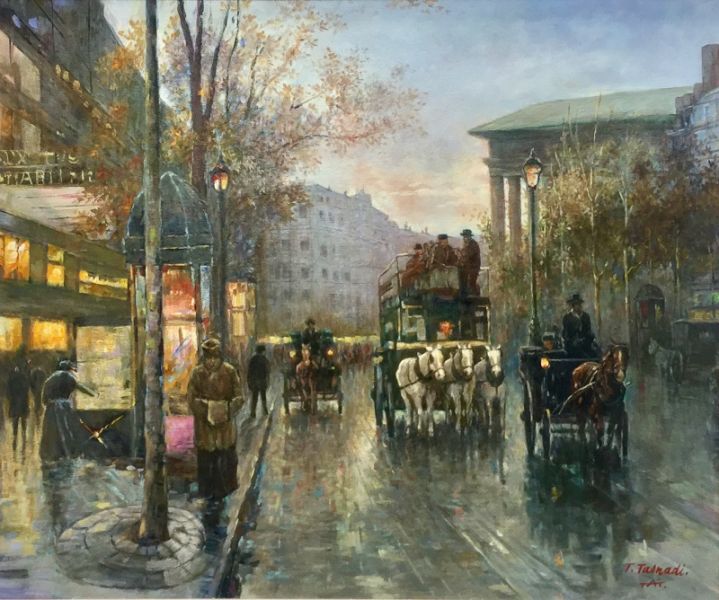
Tibor Tasnadi (1890 -1951)
Paris
Unknown Date
Sales Price is 4,000 dollars
20″ X 24″
Original Oil on Canvas Framed
Tasnadi was born in Vienna and was the grandson of German portrait painter Victor Tischler (1890-1951). Shortly after his graduation from the National Academy in Budapest, he moved to London, and then in 1956 to North America, where he continued his education and worked in various places, including Connecticut, Toronto and Tennessee before finally settling in Texas
Tibor Tasnadi (1890 -1951)
Tibor Tasnadi
Salvador Dali (1904 - 1989)
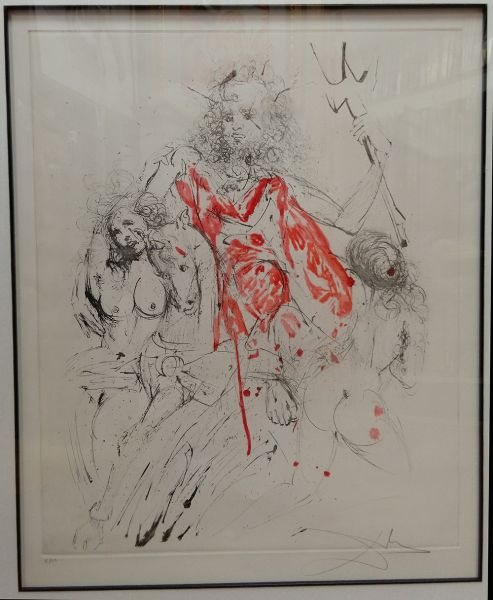
Salvador Dali (1904 – 1989)
Neptune(Poseiden)
Sales Price is 7,500 dollars
24″ x 19.5″
Etching Hand Signed by Artist
Edition 5/150
Salvador Dalí was one of the most prolific and talented surrealist artists of the 20th century. Dalí was known for hissingular persona and precise, imaginative paintings. He also worked across a wide range of media, including printmaking, film, and scupture. Born in Figueres, Spain, the artist moved to Paris in 1929. Dalí joined the surrealist movement, sharing its interest in Freudian psychoanalysis. He brought new life to the group, establishing what he called the “paranoiac-critical method.” In this approach, the artist entered a self-induced paranoid state to create works of art. One of Dalí’s most famous works is The Persistence of Memory (1931). It demonstrates the painter’s ability to capture bizarre, grotesque, and strangely beautiful images that surface from the subconscious. Dalí’s Sacrament of the Last Supper (1955), which is in the National Gallery’s collection, is one of his most ambitious paintings. It reflects the artist’s devotion to Catholicism in his later years.
Salvador Dali
Salvador Dali (1904 – 1989)
Neptune(Poseiden)
Eva Makk
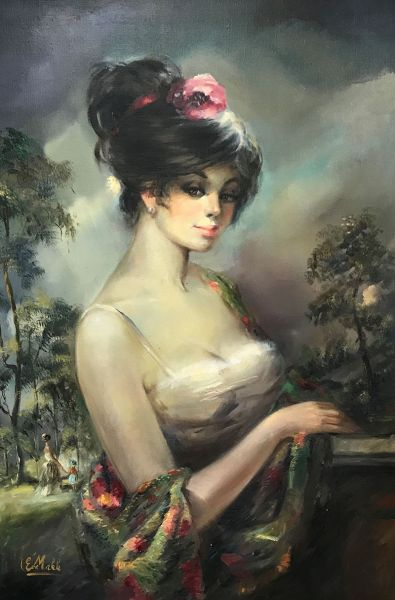
Eva Makk (1933 – ?)
Self Portrait Eva Makk
Circa 1967
Sales Price is 15,500 dollars
38.75″ x 26.25″
Original Oil on Canvas
Eva Makk has been called “the world’s foremost living impressionist painter”. She is celebrated for graceful, light-infused compositions executed with shimmering strokes of color. She is also noted for her ability to reach the spiritual essence of her subject. Her work has been the focus of major public exhibitions, including U.S. Senate Rotunda (Washington, D.C.), Carnegie International Center (New York), St. Stephen Museum (Hungary) and numerous other galleries and museums in the United States, France, Spain, Austria, Switzerland, Monaco, Hungary, Brazil, Canada and Japan. Eva is also a highly respected portrait artist. Princess Kyoko Osano of Japan and President and Mrs. Ronald Reagan are among the many dignitaries who have selected Eva Makk to create their portraits. Like Michelangelo, Eva Makk has achieved a place in art history for her legacy of monumental murals. Working jointly since 1950 with her husband, renowned artist Americo Makk, she has created murals in sixteen cathedrals and churches on two continents, a feat unequaled by any other artist in our time. Recently, Born in Ethiopia she later moved to Europe with her family. After graduating from the Academy of Fine Art in Paris, she moved to Italy to continue her formal art studies at the Academy of Fine Art in Rome. It was there that she met her future husband, fellow artist Americo Makk. The couple moved to Brazil in 1949 where their reputations as artists rose rapidly. Eva and Americo Makk received appointments as Professors of Art at Sao Paulo Academy of Fine Art and later were named Official Artists of the Brazilian Government. Among their many commissions was an unprecedented expedition deep into the Amazon rainforest to paint the indigenous tribal people. In 1962 the Makks moved to New York, then in 1967 they moved to Hawaii where they currently make their home and studio. Eva and Americo Makk’s son, A.B., (who was born in Brazil) is, like his parents, an accomplished painter whose works are exhibited and collected internationally. Today the Makks are known as “the first family of the art world”. With a history of winning awards and exhibiting in museums and galleries for over fifty years, some paintings by Eva Makk have attained values of several hundred thousand dollars. Demand for her work continues to increase as Eva Makk adds to her long list of international achievements.
Eva Makk
Eva Makk
Your Content Goes Here
Alexandra Nechita (1988 – Present)
Alexandra Nechita (born August 27, 1985) is a Romanian-American cubist painter and philanthropist. At age 12 she was dubbed the “Petite Picasso” by the media and the art community. She has been praised for her paintings and vision of art. Nechita was born in Vaslui, three months after her father, Niki, escaped from Communist Romania. She and her mother, Viorica, had to wait two years before they were allowed to join him in the United States. The family settled in California, where her father found work as a lab technician and her mother as an office manager. At the age of two, she was working with pen and ink, and by five with watercolors. By her seventh birthday, oil and acrylics were her tools. She had her first solo exhibition at age eight, at the public library in Whittier, Los Angeles County. At the time, she was a student at Orange Lutheran High School, a private school in Orange County. In 1995, at the age of ten, Nechita was taken to Paris to work at the Mourlot Studios. In the same year, she became the youngest artist to sign with International Art Publishers. When Nechita graduated, she gave her teachers a special painting that she had painted. By early 1996 Nechita had already delivered 16 solo exhibits of her paintings, and “at least $1.5 million in sales.” Nechita came to national attention in early 1997, when she was chosen to design the 39th Annual Grammy Awards Program. Nechita has been a guest on The Oprah Winfrey Show and has appeared with numerous celebrities, including Bill Clinton. Her talent and perceived similarities to Pablo Picasso led to her being known as the “Petite Picasso. She was known as a child prodigy until late in her teens, and routinely sold her paintings for $100,000 or more. In November 1999, Nechita was selected by the World Federation of United Nations Associations to lead a Global Arts Initiative involving more than 100 nations. In 2005, Alexandra Nechita unveiled her United Nations Peace Monument for Asia in Singapore, to be displayed at the Catholic High School. Her artwork has been sold and displayed at various locations in the world and her collectors include Ellen DeGeneres, Alec Baldwin, Oprah Winfrey, Melissa Etheridge, Lee Iacocca, Calvin Klein, Whoopi Goldberg, Little Richard and Paul Stanley of the rock group Kiss. She is currently the live in artist at the Beverly Hills Hotel in California.
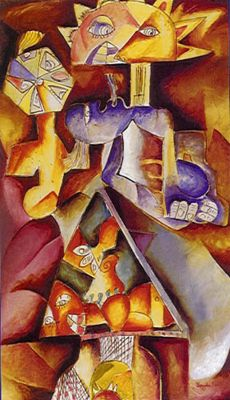
Kaleidoscope
Kaleidoscope
Unknown Date
Sales Price is 7,000 dollars
Lithograph
36″ X 25″
image
Kaleidoscope
Music Lotion
Music Lotion
Unknown Date
Sales Price is 52,500 dollars
36″ X 36″
Original Oil on Canvas Framed
Image
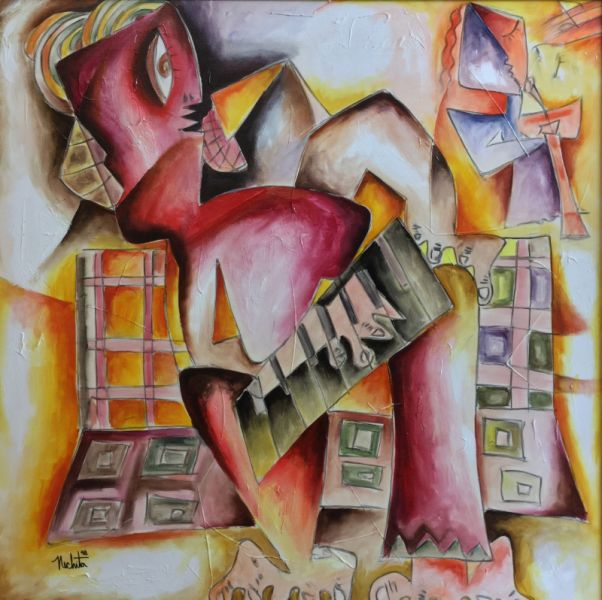
Music Lotion
Messengers Suite
Messengers Suite
Triptych (3X)
Unknown Date
Sales Price is 7,000 dollars
47″ X 20″
Original Oil on Canvas Framed
Image
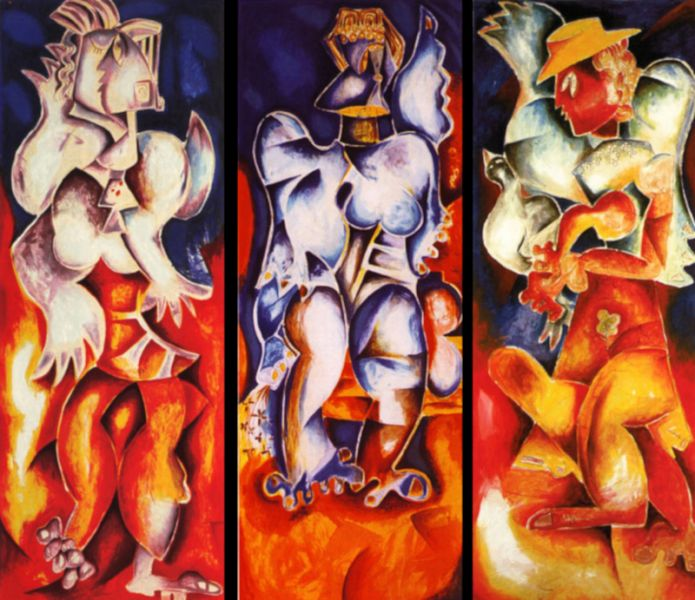
Messengers Suite
Summer in Europe
Summer in Europe
Unknown Date
Sales Price is 7,000 dollars
40″ X 28″
Original Oil on Canvas Framed
Image
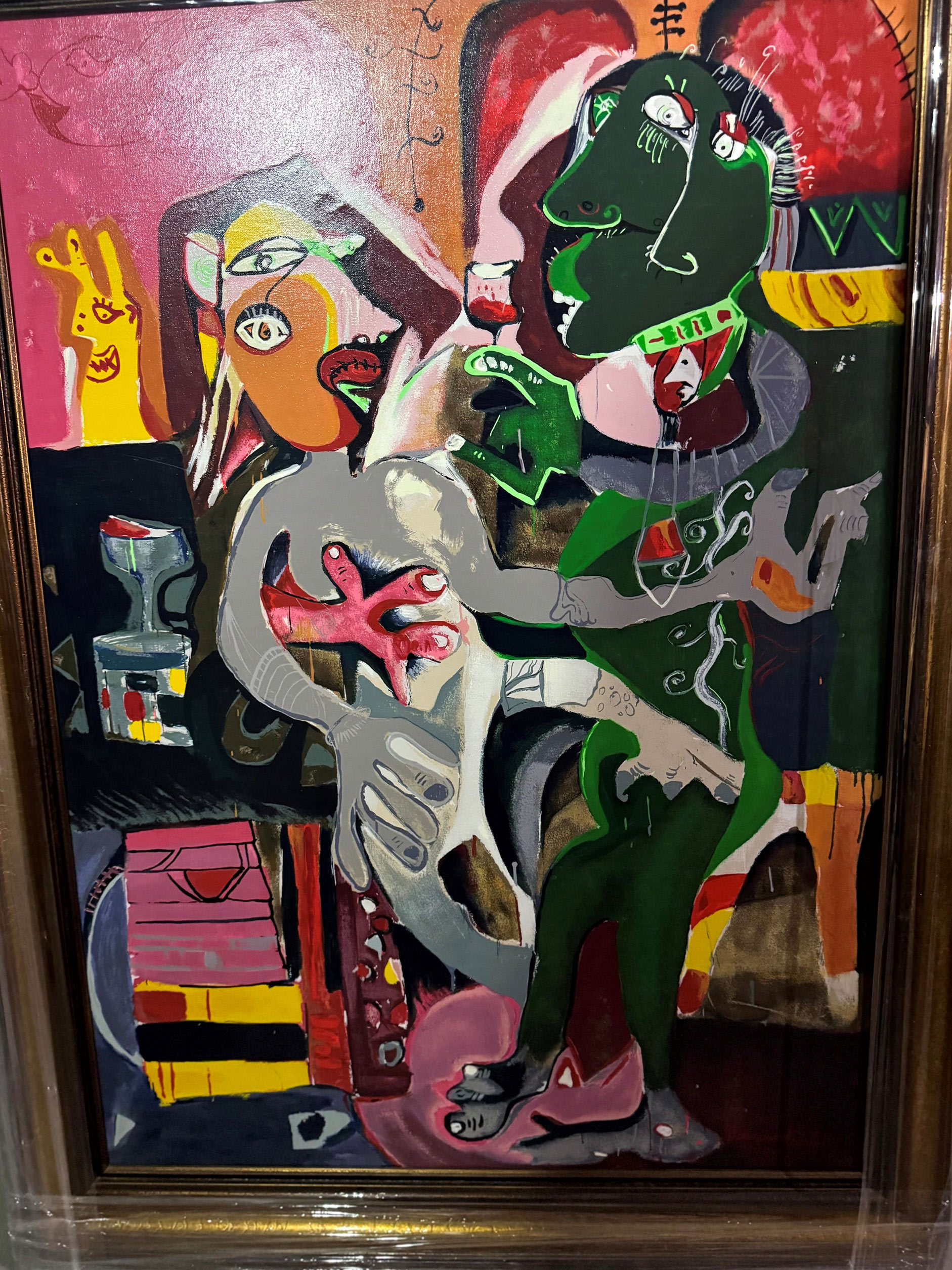
Summer in Europe
Norman Rockwell
Norman Rockwell (1894-1978)
Doctor and Doll
Bronze Statue
Unknown Date
Sales Price is 10,500 dollars
16″ H | Bronze
Norman Rockwell was an American painter and illustrator known for his iconic depictions of American culture created for The Saturday Evening Post. With a range of favorite subjects that included nuclear families, mischievous children, and small-town life, his work has achieved an iconic status: the 1943 painting of a Thanksgiving dinner, Freedom from Want, has been reproduced and parodied countless times in contemporary culture. As an artist, Rockwell has had a lasting effect on US society beyond any singular work, with his paintings seen as indelible images that went on to inspire American directors such as George Lucas, Steven Spielberg, and particularly Robert Zemeckis, whose 1994 film Forrest Gump recreates several of Rockwell’s paintings as scenes throughout the film. Though he enjoyed success throughout his career, Rockwell’s idyllic and sentimental outlook on American society was not necessarily embraced by art critics, though his later politically activist work garnered praise for its tackling of controversial subjects. Born on February 3, 1894 in New York, NY, he went on to study at the National Academy of Design and the Art Students League. Rockwell notably had a longstanding relationship with the Boy Scouts of America, for which he contributed illustrations to their annual calendar. He died on November 8, 1978 in Stockbridge, MA.
image
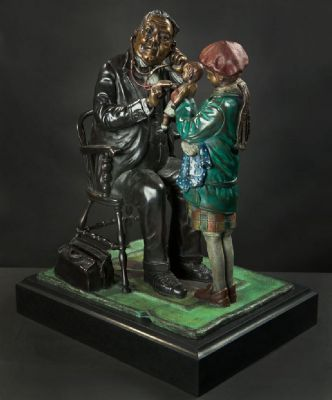
Norman Rockwell
Camille Pissarro (1830-1903)
Camille Pissarro (1830-1903)
Born in 1830 on the island of Saint Thomas in the Danish West Indies, Camille was the son of Frédéric and Rachel Pissarro. At the age of twelve, he went to school in Paris, where he displayed a penchant for drawing. He returned again to Paris in 1855, having convinced his parents to pursue a career as an artist rather than work in the family import/export business. Camille studied at the Académie Suisse alongside Claude Monet, and, during this time, he met Paul Cézanne, Édouard Manet and Pierre-Auguste Renoir. a Danish-French Impressionist and Neo-Impressionist painter born on the island of St Thomas (now in the US Virgin Islands, but then in the Danish West Indies). His importance resides in his contributions to both Impressionism and Post-Impressionism. Pissarro studied from great forerunners, including Gustave Courbet and Jean-Baptiste-Camille Corot. He later studied and worked alongside Georges Seurat and Paul Signac when he took on the Neo-Impressionist style at the age of 54. In 1873 he helped establish a collective society of fifteen aspiring artists, becoming the “pivotal” figure in holding the group together and encouraging the other members. Art historian John Rewald called Pissarro the “dean of the Impressionist painters”, not only because he was the oldest of the group, but also “by virtue of his wisdom and his balanced, kind, and warmhearted personality”. Paul Cézanne said “he was a father for me. A man to consult and a little like the good Lord”, and he was also one of Paul Gauguin’s masters. Pierre-Auguste Renoir referred to his work as “revolutionary”, through his artistic portrayals of the “common man”, as Pissarro insisted on painting individuals in natural settings without “artifice or grandeur”. Pissarro is the only artist to have shown his work at all eight Paris Impressionist exhibitions, from 1874 to 1886. He “acted as a father figure not only to the Impressionists” but to all four of the major Post-Impressionists, Cézanne, Seurat, Gauguin, and van Gogh.
Portrait of Guillaumin
Portrait of Guillaumin
Unknown Date
Sales Price is $20,000
8″ x 12″
Original Oil on Canvas
Framed
Image
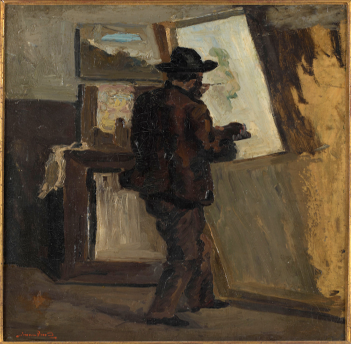
Portrait of Guillaumin
La Cuille
La Cuille
Unknown Date
Sales Price is $20,000
9″ x 13.7″
Original Ink Drawing Framed
Image
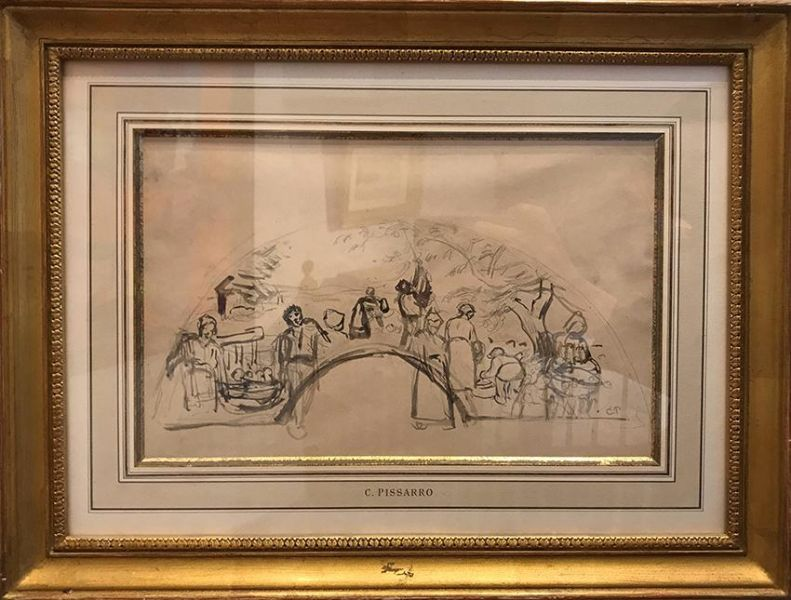
La Cuille
Marche A Dieppe
Marche A Dieppe
Unknown Date
Sales Price is S20,000
6.6″ x 4.7″
Original Charcoal with Sepia Wash
image
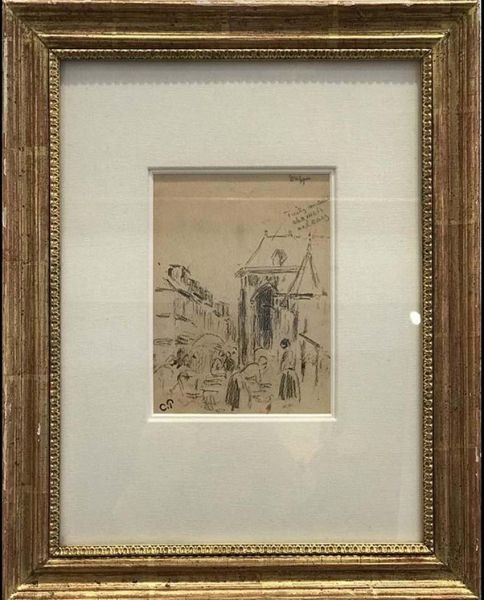
Marche A Dieppe
Lelia Pissarro
Lelia Pissarro (1963- Present)
Les Fleurs
Unknow Date
Sales Price is 12,000 dollars
18″ x 21.5″
Original Oil on Canvas
Lélia Pissarro was born in Paris, France in 1963, the third and youngest child of the artist Hugues Claude Pissarro and his first wife Katia, an art dealer. She was raised, until the age of eleven, by her grandparents in Clécy, Normandy, and also lived with her brother Joachim Pissarro, an art historian. There her interest in drawing and painting was nurtured by her grandfather Paulémile (the youngest son of Camille Pissarro), who taught her the fundamentals of Impressionist and Post-Impressionist techniques. She held her first exhibition at the Salon de la Jeune Peinture, subsequently taking part in an exhibition at the Luxembourg Museum in Paris. When she returned to her parents in Paris, her father, H. Claude Pissarro, tutored her until she enrolled at l’Ecole des Beaux-Arts in Paris in the 1980s, later teaching art at the Moria School and studying oil painting restoration at the laboratory of the Louvre. She had solo exhibitions in Paris, Lyon, Mulhouse and Rennes. In 1988 she moved to London, England and in the same year participated in the international touring exhibition ‘Pissarro: The Four Generations’. She has since exhibited frequently both in the UK and internationally, having moved gradually from the more traditional Post-Impressionist technique towards a more contemporary style. Lélia Pissarro lives and works in London. She is married to the art dealer David Stern, with whom she co-founded the Stern Pissarro Gallery in St James, Piccadilly.
image
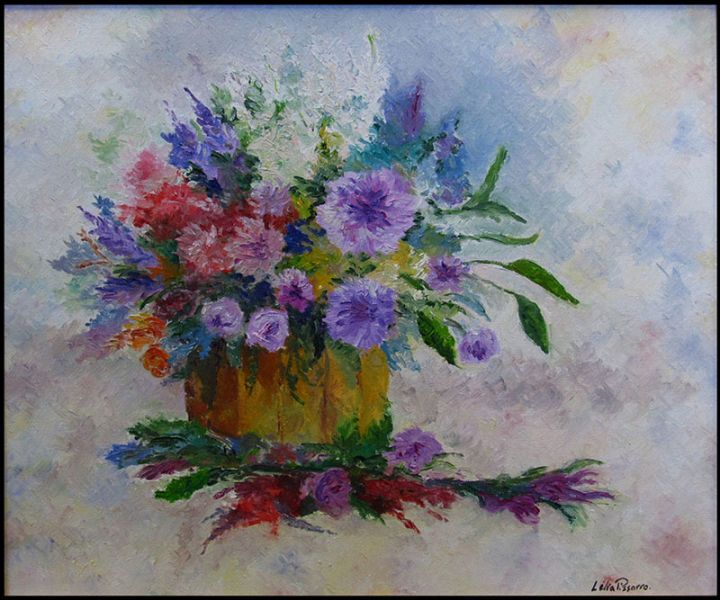
Les Fleurs
Georges Henri “Manzana” Pissarro (1871 – 1961)
Dordoqne France
Unknown Date
Sales Price is 20,000 dollars
14″ x 10″
Original Oil on Canvas
He was the third child of Impressionist artist Camille Pissarro. He was of Portuguese-Jewish descent. Like all second-generation Pissarro artists, Georges Henri ‘Manzana’ Pissarro initially worked under a pseudonym. Born in 1871, Manzana was the third of Camille Pissarro’s seven children, adopting the name ‘Manzana’ in 1894 after the maiden name of his maternal grandmother. It was not until around 1910, to honour his deceased father, that he employed his family name when signing his work. Manzana studied with his father from an early age and spent his formative years surrounded by the distinguished artists associated with the Impressionist movement – Claude Monet, Paul Cézanne, and Paul Gauguin – who frequented the Pissarro home in Éragny. At his father’s side he learnt not only to handle brush and pencil but also to observe nature and its changing qualities. Subjected to rich and diverse influences, Manzana became a prolific and versatile artist, working with oil, pastel and watercolour as well as etchings, lithography and stencils. As a young man he adopted his father’s purely Impressionist style and produced a series of landscapes around Éragny. He exhibited Impressionist works at the Salon d’Automne and the Salon des Indépendants, as well as Durand Ruel and Druet galleries in Paris in the early 1900s. In 1906 his work began to evolve. Inspired by Dr Mardus’ French translation of ‘A Thousand and One Nights’, Manzana embarked on a grand project to publish his own illustrated version of these magical tales. This pulled Manzana into the umbrella of the decorative arts movement where he flourished creating tapestries, glassware, furniture, ceramics and metal work, all inspired by Orientalism and often incorporating gold, silver and copper paint. In 1907 he had his first exhibition of decorative works at Vollard but it was the 1914 exhibition at the Musée des Arts Décoratifs in Paris which dramatically boosted his career. Here he exhibited 311 works including tapestries, carpets, furniture, glassware, decorative paintings, etchings and lithographs. The subsequent years were filled with bright ideas, gilded costumes and a glittering lifestyle as Manzana navigated the 20s and 30s between Les Andelys and Paris, spending many summers in Brittany. These culminated in a series of colourful yet delicate new works which Manzana exhibited prolifically. When war broke out in 1939 Manzana moved with his family to Casablanca, where he remained until 1947. Manzana was married and widowed three times. The last years of his life were spent in Menton with his son Félix who was also an accomplished artist. There Manzana returned to the Impressionist tradition of his early years, painting the serene landscapes that surrounded him.
image
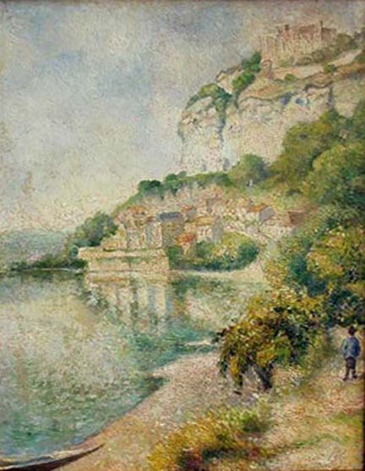
Dordoqne France
Ludovic “Rodo” Pissarro (1878 – 1952)
Ludovic-Rodolphe Pissarro, born in Paris in 1878, was Camille Pissarro’s fourth son, and encouraged by his father he began drawing from nature at an early age. He was familiarly known as Rodo and generally signed his works ‘Ludovic-Rodo’ or just ‘Rodo. The impact of Camille’s art and teaching on Rodo was considerable, and his artistic production encompassed a wide range of media, including oil painting, tempera, watercolour, gouache, wood engraving, drawing and lithography. In 1894, at the age of sixteen, Rodo published his first wood engravings in the anarchist journal, Le Pere Peinard, and when Camille left France for the safety of Belgium during the anarchist upheavals of that year Rodo joined him there. Rodo moved into his first studio in Montmartre with his brother Georges in 1898 and found the night-life of Paris, and the habitués of the cafes, theatres, circuses and cabarets of the area, compelling subjects for his work. With his younger brother Paulémile he met artists such as Kees Van Dongen, Maurice de Vlaminck and Raoul Dufy, and in 1905 he participated in the first Fauve exhibition at the Salon des Indépendents. At the outbreak of war in 1914 Rodo moved to England, and over the next few years he lived mainly in and around West London. He worked closely with his brother Lucien to establish, in 1915, the Monarro Group which was formed with the aim of exhibiting work by contemporary artists inspired by Impressionism. Many of the works produced by Rodo while he was in England were of major London landmarks. After 1924, when Rodo had already returned to France, he divided his time between Paris and Les Andelys in Normandy. Despite his rich artistic heritage and his achievements as an artist, Rodo is perhaps best remembered for his contribution to art history. For twenty years he researched and compiled a catalogue of his father’s paintings – a project that was finally published in two volumes in 1939 and which is still considered to be the definitive reference book on Camille’s work. Ludovic-Rodo Pissarro, a painter and print maker exhibited regularly at the Salon of Independence, at galleries in Paris and in London and many museums of modern art. AAAA Bal Bullier (Skater) Bal Bullier was the site of two annual balls held to raise money for needy artists; the first sponsored by the AAAA (Aide Amicale aux Artistes) and the other by the Union of Russian Artists. The Russian group, headed by Iliazd, Mikhail Larionov, and Natalie Gontcharova, designed posters, thought up themes like Bal Transmental, and Bal Banal, and produced and sold elaborate programs with poetry and artwork. Each year of the costume ball, an important artist was selected to do an original color lithograph poster to promote the AAAA Ball. For the 1929 fund raising ball, Ludovic-Rodo Pissarro was the selected artist. It is interesting to note the initials of the organization were carved in the ice by the ice skater. The historical significance of this costume ball is noted in a fascinating book titled Kiki’s Paris – Artists and Lovers 1900-1930 by Billy Kluver and Julie Martin, copyright 1989, published by Harry Abrams. In 1920 After Rodo returned to France, he split the rest of his time between Paris and the countryside of Normandy.
Juillet
Juillet
1894
Sales Price is 3,000 dollars
8″ x 11.5″
Original Pencil Sketch
Your Content Goes Here
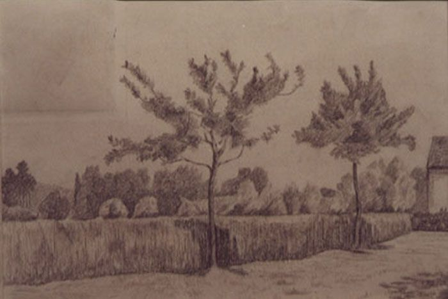
Juillet
nude
Nude
Drawing
Unknown Date
Sales Price is 3,000 dollars
12″ X 11″
Your Content Goes Here
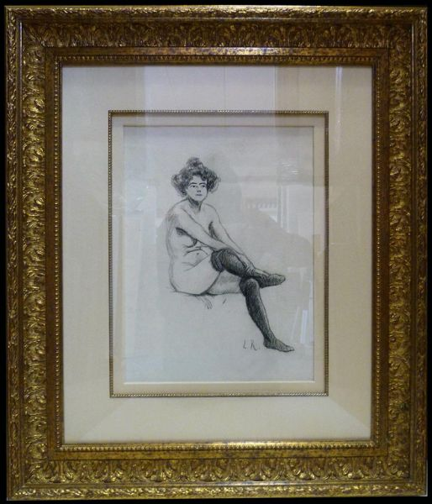
nude
Paul-“Émile” Pissarro (1884-1972 )
Paul-Emile Pissarro, born on August 22nd, 1884 in Eragny, France, was the fifth and youngest son of Camille Pissarro, the renowned French Impressionist and Neo-Impressionist. His father, who recognized Emile’s early talents and encouraged him to draw from an early age, cultivated an artistic environment for his children. In 1899, Paul-Emile Pissarro took courses in Gisors, but stopped after a few months in order to accompany his father in an artistic journey to Havre to Dieppe and then Rouen. During the last years of his father’s life, his family lived in Paris, where Paul-Emile studied in a private art academy. After the death of his father in 1903, he returned to live with his mother in their summer home in Éragny, about thirty kilometers from Giverny where his godfather Claude Monet lived. Monet, who was very close to Camille, became his mentor and friend. He often visited Giverny, where Monet gives him lessons in painting and gardening, encouraging him to follow the footsteps of his father. Claude Monet, proved to be an invaluable teacher and close friend. Emile studied with his father first and then Monet and was exhilarated by the fleeting effects of country life. In 1905, Pissarro exhibited an impressionist landscape entitled Bords de l’Epte à Eragny at the Salon des Independants. The years 1908 – 1914 were a difficult time in the artist’s life. In 1908 he worked as a mechanic and test driver, then as a designer of textiles and laces, work which gave him little free time to devote to painting. While he works at the lace factory, his brother Lucien Pissarro, while in London, asked him to send him some watercolors. The interest shown by British prompted him to start painting again. With the help of his brother, he began exhibiting in London at the New English Art Club, the Baillie Gallery and the Allied Artists Association. By the 1920s, Paul-Emile had become an established Post Impressionist artist, sharing a studio with Kees Van Dongen and spending the summer months escaping from Paris with him and Maurice de Vlaminck. During the late 1920s and early 1930s Paul-Emile reached the pinnacle of his artistic development, realizing the individual style for which he is now best known. In 1930, on the recommendations of Raoul Dufy, Paul-Emile Pissarro visits Swiss Normandy and falls in love with the Calvados region; the combination of blue hills and green meadows separated by the calm waters of the river offered Paul-Emile a new platform for his work. After the divorce with his first wife, he moved to Norman, Switzerland in 1934. In 1935, he moved to Clécy, where he resided for the rest of his life. In 1967, Pissarro had his first one-man show in the United States at Wally Findlay Galleries in New York. Following this show, he reached widespread recognition and a degree of professional success. Since his death in 1972, Pissarro’s paintings have been exhibited around the world, and interest in his work is still very strong and continues to grow.
River Bank
River Bank
Unknown Date
Sales Price is 4,000 dollars
22.5″ x 19.5″
Original Charcoal Drawing
image
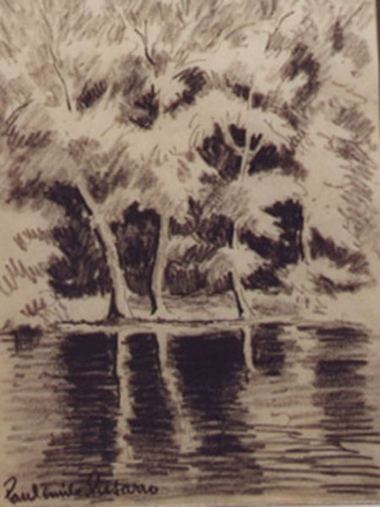
River Bank
North View River O'rne
North View River O’rne
Unknown Date
Sales Price is 4,500 dollars
9.25″ x 12.25″
Pen & Ink on Paper
image
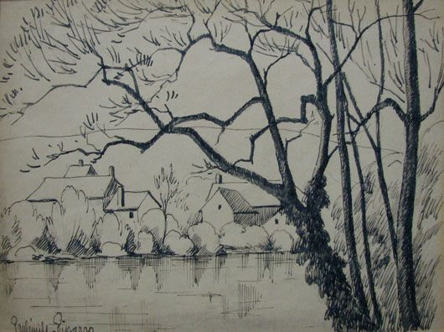
North View River Orne
Study Of A Woman
Study Of A Woman
Unknown Date
Sales Price is 4,500 dollars
10″ x 8.25″
Drawing
image
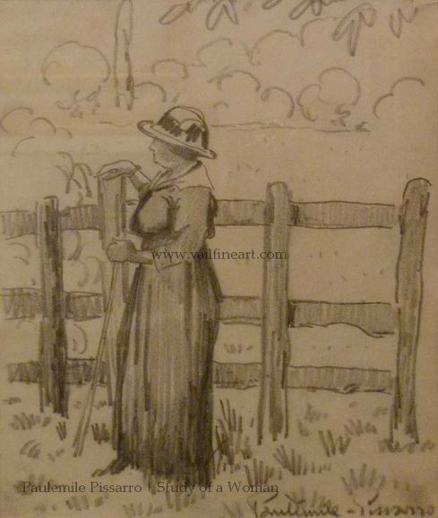
Study Of A Woman
The River Orne
The River Orne’
Unknown Date
Sales Price is 3,500 dollars
12″ x 9.5″
Original Drawing on Paper
image
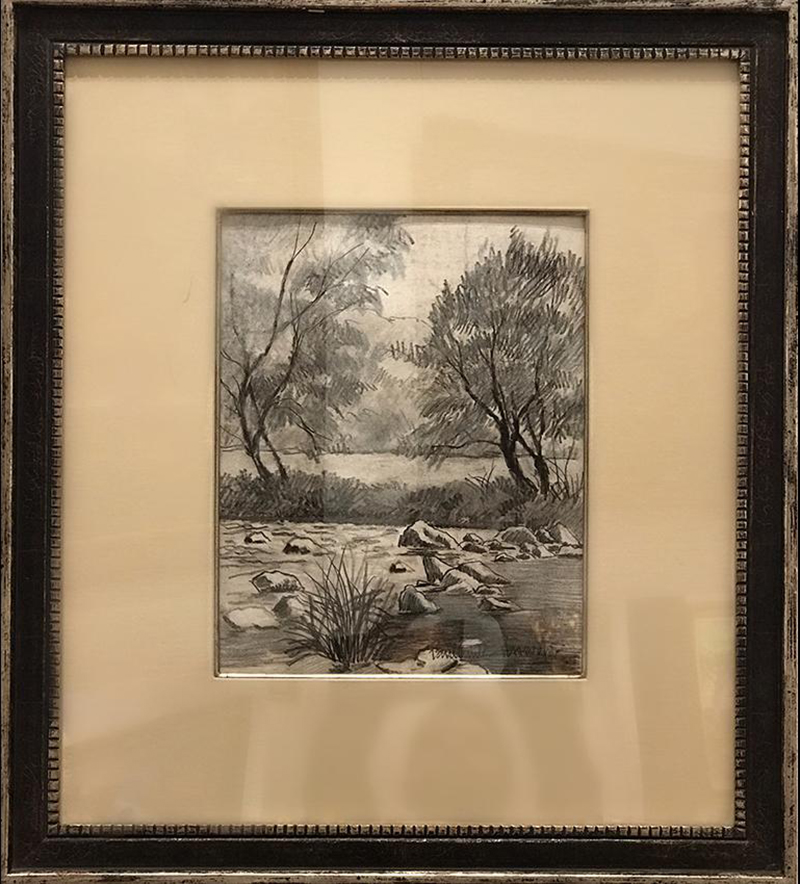
The River Orne
Richard McDonald
Richard McDonald (1946 – Present)
Joe DeFemme
Unknown Date
Sales Price is 38,000 dollars
14″ x 15.5″ x 20.5
Quarter Life
Bronze
Macdonald is often recognized for his work as a bronze sculptor. Many of his sculptures depict athletes and performers, including the bronze sculptures Blind Faith and The Gymnast. In 1996, Macdonald created a sculpture for the 1996 Summer Olympics entitled The Flair. He has also completed projects for various companies and businesses, including MGM Film Group Inc. and the Royal Ballet School. Macdonald did not become a full-time sculptor until 1983. Prior to his sculpting career, he worked as an illustrator. Many of his illustrations were for the NBA and the NFL. He also did illustrations for the Olympics. However, after working as an illustrator for over 10 years, Macdonald was ready to try something new. While he had created sculptures out of clay, Macdonald had never used bronze. He learned the basics of bronze sculpting and created his first sculpture. He exhibited it in his gallery, which also featured artwork by Andrew Wyeth (American, 1917–2009). The sculpture quickly sold and Macdonald continued growing his new career by taking on several major projects, such as creating a sculpture of Stephen F. Austin for the Texas sesquicentennial. His work has been featured in several exhibitions, including one held at the Corcoran Gallery of Art in Washington D.C., and the National Parkinson Foundation exhibition. Macdonald has also taught at several institutes, including the Art Institute of Atlanta in Atlanta, GA. Macdonald actively participates in auctions and charities in an effort to raise money for various foundations, including the Boys and Girls Club and ChildHelp USA. Macdonald donated his sculpture Doves, Third Life to Celebrity Fight Night, an auction started to raise money for Parkinson”s disease research. The sculpture was sold for US $110,000. 1971 Graduated Cum Laude, Art Center College of Design, 1983 retired from illustration to become a sculptor, 1984 selected for sculpture of Stephen F. Austin, Sesquicentennial celebration, Texas, 1985 monumental sculpture for MGM’s headquarters, Culver City, 1991 Gold Medal Winner, Knickerbocker Artists Annual Exhibit, New York, NY, 1/4 Life Bronze Statue and Best in Show, Los Angeles Art Center, Los Angeles, CA, 1998 Medal of Honor, Momentum – 100th U.S. Open, United States Sports Academy, AL, and appointed as Honorary Professor at Shanghai Institute of Visual Art, Fudan University. He is also a Fellow, National Sculpture Society. 1/4 Life Size Bronze.
image
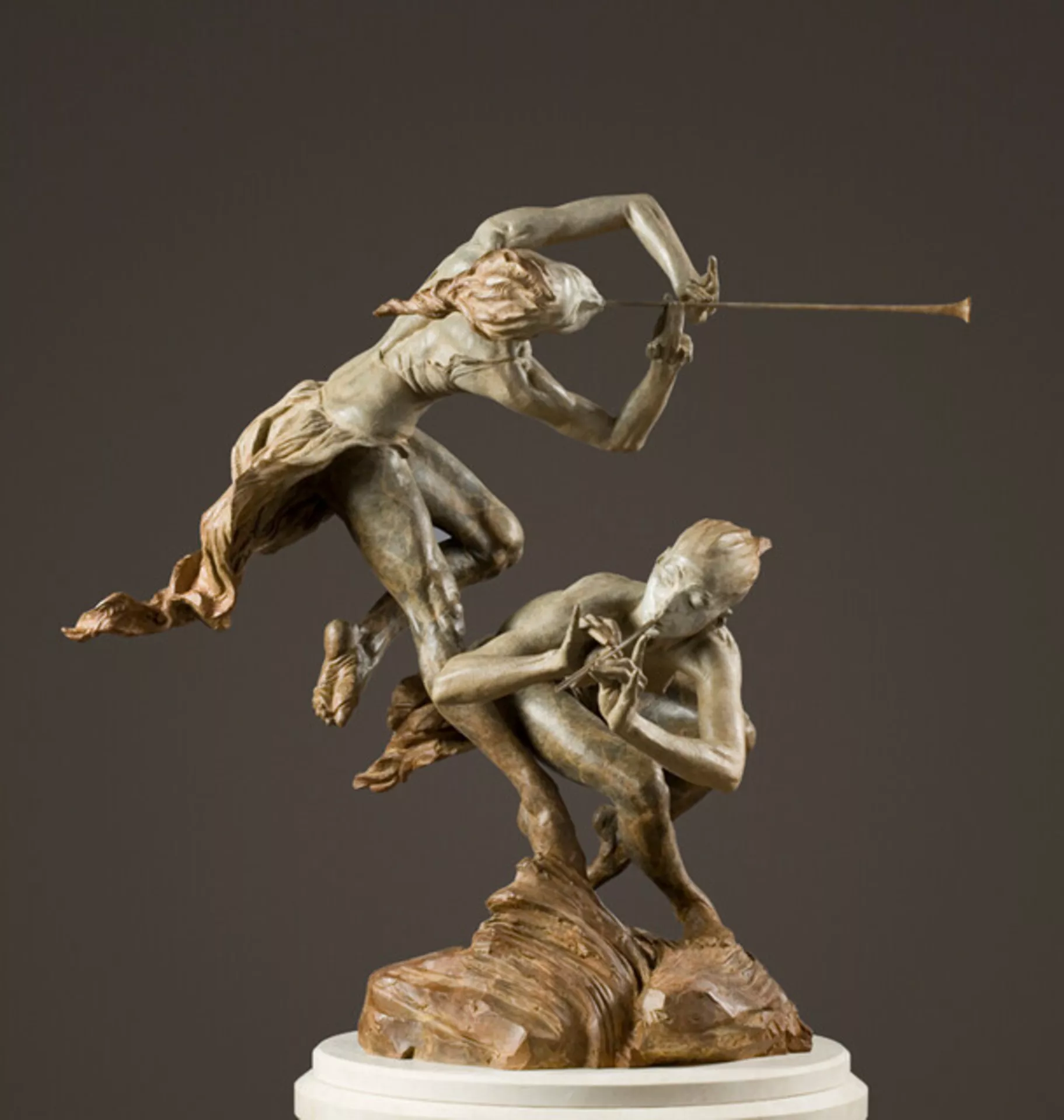
Joe DeFemme
Walt Horten
Walt Horten (1949 – Present)
Smoked Trout
Unknown Date
Sales Price is 5,000 dollars
Bronze Statue
17.5″ H x 20″ x 11″
Edition 108 of 150
Growing up in Soviet Armenia, Arbe (Ara Berberyan) was son of a well-known artist and professor of art & design. Arbe received his Masters degree from the University of Art and Design in Yerevan, Armenia in 1981. While he was there, it was difficult to find books on the western artists he loved. However, he managed to find books on his favorite inspirations: Dalí, Picasso, Titian, Rembrandt, and especially Klimt. As a scholar of art and design, books on Klimt particularly motivated Arbe. He earned a Master’s Degree in 1981 and quickly began his career as a fine artist by accepting government commissions for murals at the Yerevan Airport, theaters, hotels and other government projects. Always working with his hands, whether in carpentry, painting, or graphic arts, Arbe always steadily improved and expanded his artistic talent, eventually able to devote his time to the creation of fine art. Today he is married with two children and based mainly in California, Arbe’s creation process is quite fascinating. He starts loosely sketching without any intent or design while listing to the works of Mozart, Verdi, Bach, and other various classical musicians. He will move on with the work based on his mood, often switching back and forth from piece to piece based on how he is feeling.
image
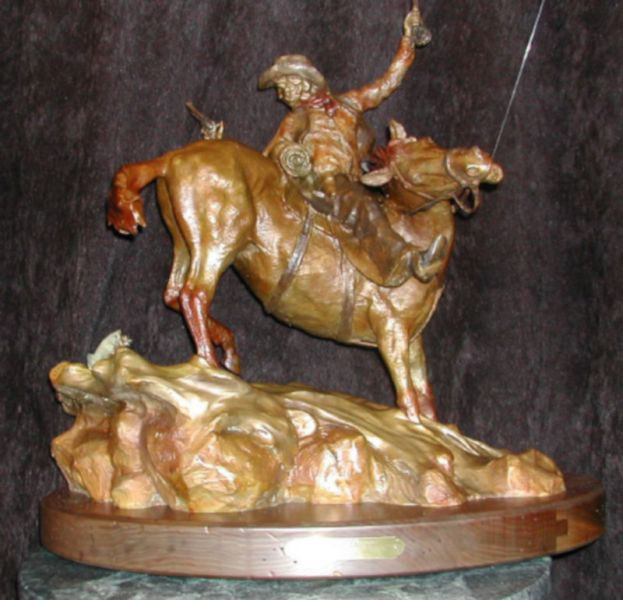
Smoked Trout
Yuri Yuros (1956 – Present)
Yuri Yuros (1956 – Present)
Yuroz, often regarded as a “people’s artist,” occupies a distinctive space in contemporary art. His oeuvre chronicles the breadth of human emotion and experience, from the tender intimacy of lovers to the resilient spirit of refugees. Deeply autobiographical, Yuroz’s work emerges as a dialogue between personal memory and universal truths, rendering him a storyteller of the human condition. Born in Soviet Armenia in 1956, Yuroz exhibited prodigious talent early in life. At just ten years old, he was admitted to the Akop Kodjoyan School of Art in Yerevan, an institution renowned for nurturing artistic prodigies. His academic journey culminated at the Yerevan University of Art and Architecture, where he refined his mastery of form and composition. The rigor of his architectural training is evident in the structural sophistication of his work, where fluid lines and calculated geometry coalesce into visual poetry. Yuroz’s artistic practice traverses diverse media, from canvas to bronze, digital NFTs to functional art. This multidisciplinary approach reflects his refusal to be confined by conventional boundaries. Each piece reveals his characteristic use of symbolism—a vital tool through which Yuroz invites viewers to engage in introspection. His thoughtful integration of color and form guides audiences through complex narratives, embodying themes of resilience, compassion, and renewal. A pivotal moment in Yuroz’s career came in 1989 when his painting The Light of Compassion was selected for inclusion in the Vatican’s permanent collection. Commissioned to honor the canonization of Arcangelo Tadini, the work exemplifies Yuroz’s ability to intertwine spiritual depth with humanist themes. The Vatican’s recognition of Yuroz marked him as a significant figure in the global art scene, positioning his work as a bridge between sacred tradition and contemporary artistic inquiry. He lived as a refugee for seven years before arriving in the United States in 1985. This experience profoundly shaped his artistic vision, instilling a deep empathy for the displaced and marginalized. This theme became central to Yuroz’s work, culminating in his commission by the United Nations for their 50th-anniversary stamp in 2000. His mural, Respect for Refugees, unveiled at the Jacob K. Javits Convention Center in New York, transcended the boundaries of art to become a poignant testament to human resilience. Yuroz’s art also engages with broader humanitarian themes, as seen in his Human Rights mural, a six-panel polyptych that traces humanity’s journey from oppression to prosperity. Revealed at the United Nations Headquarters in 2004, this work exemplifies Yuroz’s commitment to using art as a medium for social commentary. Eschewing permanence, he opted to take the mural on a global tour, leveraging its impact to inspire and educate. Art historians regard Yuroz as a master of visual narrative, a creator whose works transcend aesthetic appeal to serve as artifacts of human resilience and hope. His distinctive cubist style, informed by both architectural precision and emotional depth, situates him within a lineage of artists who use form and symbolism to navigate the complexities of existence.
Delicate Balance Bronze Statue
Delicate Balance Bronze Statue
Unknown Date
Sales Price is 9,000 dollars
17″H Bronze
Limited Edition #3/49. Last one available
Image
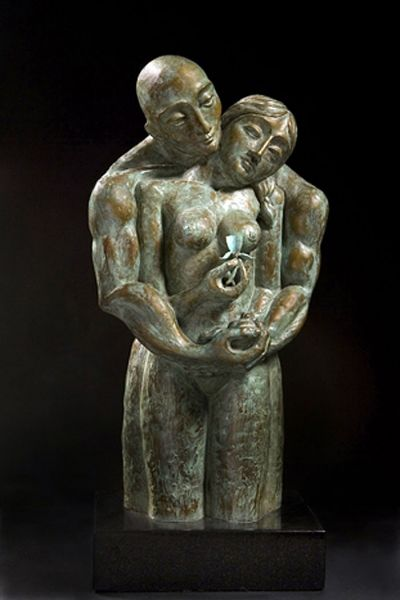
Delicate Balance Bronze Statue
The Touch
The Touch
Unknown Date
Sales Price is 9,000 dollars
Bronze Statue 27″H
Limited Edition #15/49
The Touch
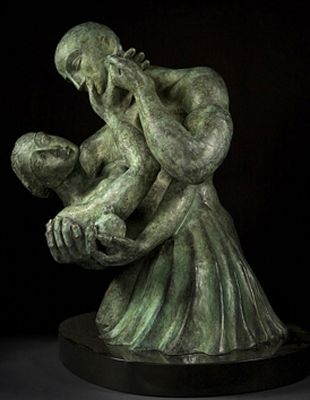
The Touch
Seeds of Desire
Seeds of Desire
Unknown Date
Sales Price is 3,500 dollars
Serigraph
40″ x 30″
Limited Fine Art Editions #80/150
image
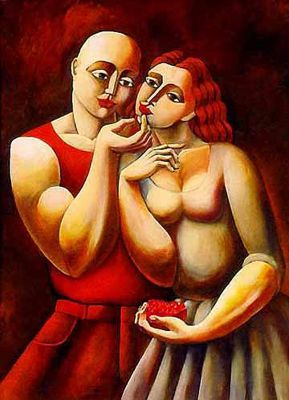
Seeds of Desire